Converting Your Oven To An Air Fryer: The Practical Guide
Air fryers have taken over kitchens everywhere. People love them for their speed, crisp results, and healthier approach to fried foods. But what if you don’t own an air fryer? Is it possible to use your regular oven and get similar results?
The answer is yes—with a few smart tricks. This guide explains how to convert oven recipes to air fryer style, what tools make a difference, and how to get the most out of your oven for air frying.
Why People Love Air Fryers
Air fryers have become popular because they cook food quickly and use much less oil. They work by circulating hot air around food, creating a crispy outside while keeping the inside juicy. Oven cooking often takes longer and sometimes food turns out soggy instead of crisp.
That’s why many people want air-fried results but don’t want to buy another kitchen gadget.
Can An Oven Really Work Like An Air Fryer?
While a standard oven and an air fryer are not exactly the same, you can get close. The main difference is air flow. Air fryers are designed with fans that move hot air rapidly, while most ovens have slower or less focused airflow. However, with the right strategies, you can mimic air fryer results in your oven.
How Ovens And Air Fryers Compare
Here’s a quick look at the main differences:
| Feature | Air Fryer | Oven |
|---|---|---|
| Heat Source | Convection (fan + heating element) | Heating elements (with or without fan) |
| Air Circulation | High-speed, concentrated | Slower, less direct |
| Cooking Speed | Very fast | Slower (usually 20-30% longer) |
| Crispiness | Excellent | Good, with technique |
| Oil Use | Very little | Low, but sometimes more than air fryer |
Knowing these differences helps you make adjustments for better results.
Essential Tools For Air Frying In Your Oven
You don’t need to buy a new appliance, but a few tools can help your oven mimic an air fryer:
- Wire rack: Allows hot air to circulate under and around food, making things crispier.
- Baking sheet: Catches drips and keeps your oven clean.
- Convection setting: If your oven has a convection feature, use it. It moves air more like an air fryer.
- Parchment paper or silicone mat: Prevents sticking and is useful for foods that might drip or ooze.
- Oil spray bottle: Lets you add a thin, even layer of oil, just like with an air fryer.
If you don’t have a wire rack, flip food halfway through baking to crisp both sides.
How To Convert Oven Recipes To Air Fryer Style
Making oven recipes “air fryer friendly” means a few adjustments:
1. Use The Right Temperature
Air fryers usually cook at higher temperatures. A good rule:
- Increase oven temperature by 25°F (about 15°C) compared to air fryer recipes.
So, if the air fryer recipe says 375°F, set your oven to 400°F.
2. Adjust Cooking Time
Because ovens heat food more slowly, you’ll need to cook things longer:
- Add 20–30% more time than the air fryer recipe suggests.
- For example, if the air fryer says 10 minutes, aim for 12–13 minutes in the oven, checking often.
3. Arrange Food For Maximum Air Flow
- Spread food in a single layer on a wire rack or baking sheet.
- Avoid overcrowding—crowded food steams, not crisps.
- For small pieces (like fries or nuggets), leave space between each piece.
4. Use Oil Wisely
- Spray or brush a light layer of oil on your food. This helps browning and crispiness.
- Too much oil leads to soggy results. Air fryers use only about 1–2 teaspoons for a whole batch.
5. Flip Or Toss Food
- For even crisping, flip food halfway through cooking.
- For items like fries, shake the pan or use tongs to turn them.
6. Preheat Your Oven
- Air fryers heat up in minutes, but ovens take longer.
- Always preheat your oven fully before adding food for the best texture.
7. Watch For Doneness
- Start checking your food a few minutes before you expect it to be done.
- Ovens vary, so keep an eye out for golden brown color and crispy texture.
Example Conversions: Popular Foods
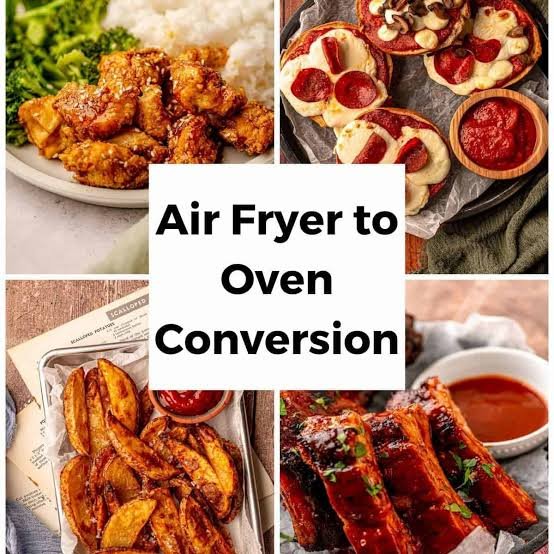
To make things clearer, here’s how to convert some common air fryer favorites for your oven:
| Food | Air Fryer Temp/Time | Oven Temp/Time | Tips |
|---|---|---|---|
| French Fries | 400°F / 15 min | 425°F / 20-25 min | Single layer on rack, flip halfway |
| Chicken Wings | 380°F / 25 min | 400°F / 30-35 min | Use rack, pat wings dry, spray oil |
| Frozen Nuggets | 400°F / 10 min | 425°F / 13-15 min | Space apart, flip once |
| Vegetables | 375°F / 10 min | 400°F / 13-15 min | Cut evenly, don’t crowd |
Getting The Most Crispiness From Your Oven
If you want that air fryer crunch, these tips make a real difference:
- Pat food dry: Moisture on the surface prevents browning.
- Use a rack: Elevates food and allows hot air to reach all sides.
- Don’t line your pan with foil: Foil blocks air flow; use a rack or parchment.
- Use convection if possible: This is the biggest air fryer advantage. If your oven has a convection fan, turn it on.
- Finish under broil: For extra crisp, broil food for 1–2 minutes at the end, but watch closely to avoid burning.
Many beginners skip drying food or overcrowd the pan—these small mistakes can ruin the result. Also, don’t skip preheating; cold ovens mean soggy food.
When Oven Air Frying Works Best
You’ll get the best results with foods that are naturally dry or breaded. Here are some top picks:
- Frozen snacks: Fries, nuggets, spring rolls, mozzarella sticks
- Breaded chicken or fish
- Roasted vegetables
- Homemade chips
- Bacon
Ovens are not ideal for battered foods (like tempura) because the batter may drip and not crisp well.
Limitations: What You Can’t Fully Replicate
While you can get close, some things just work better in an air fryer:
- Very small batches: Air fryers are fast for tiny amounts; ovens are less efficient.
- Delicate or heavily battered foods: They can stick or fall apart in the oven.
- Super thick items: Air fryers cook thick pieces more evenly.
If you cook for one or two people, an air fryer might still be worth it for speed and convenience. For families or bigger batches, the oven is more practical.
Oven Air Fryer Conversion Mistakes To Avoid
Many people make simple mistakes when trying to “air fry” in the oven:
- Skipping the rack: Food on a flat pan can get soggy underneath.
- Using too much oil: Less is more. Spray lightly for best results.
- Not preheating: A cold oven ruins crispiness.
- Overcrowding: Always leave space for air to circulate.
- Ignoring your oven’s quirks: Every oven is different. Watch your first few attempts and adjust as needed.
A helpful non-obvious tip: If you’re cooking two trays at once, rotate their positions halfway through. Heat can be uneven in most ovens, so this improves consistency.
When To Consider Buying An Air Fryer
If you love crispy foods, cook small batches often, and want to save time, an air fryer might be worth buying. But if you already have a convection oven and good tools, you might not need one. Air fryers also use less energy for small jobs, which could save money over time.
For more on the science behind air frying and convection ovens, check out this Wikipedia article.
Advanced Tips For Better Results
Once you’re comfortable with basic conversion, these tips take your oven “air frying” further:
- Try a pizza stone: It holds heat and helps crisp the bottoms of foods like fries and nuggets.
- Use a thermometer: Ensures chicken and other meats are fully cooked but not overdone.
- Marinate meats: For more flavor, but pat dry before cooking to avoid steaming.
- Experiment with breading: Use panko crumbs for extra crunch and spray lightly with oil.
If you want to invest a little, some companies sell special “air frying baskets” designed for ovens. These can improve airflow and results.
Cleaning Up After Oven Air Frying
One hidden benefit: oven racks and pans are usually easier to clean than air fryer baskets, which can have lots of nooks and crannies. Use parchment paper or a silicone mat for less mess. If you get grease on your wire rack, soak it in hot, soapy water to loosen baked-on bits.
Frequently Asked Questions
Can I Use My Oven As An Air Fryer For All Recipes?
You can use your oven to “air fry” most foods that work in an air fryer, but not all. Foods with a batter or those that need very high, direct heat (like blooming onions or doughnuts) may not come out as well.
Dry, breaded, or frozen foods are the easiest to convert.
Do I Need To Buy A Special Air Fryer Tray For My Oven?
No, but a wire rack really helps. It lifts food so air can circulate underneath, improving crispiness. If you want to go further, “air fry baskets” for ovens are available, but many people get good results with a basic rack and baking sheet.
Is A Convection Oven The Same As An Air Fryer?
They are similar. Both use a fan to move hot air. However, air fryers are usually smaller and the air moves faster and more directly. This is why air fryers can cook food quicker and crispier. But a convection oven, especially with the right tools, can get very close.
Should I Use Parchment Paper Or Foil When Oven Air Frying?
Parchment paper is better than foil. It prevents sticking and doesn’t block air flow as much. However, for the crispiest results, place food directly on a rack and put parchment or a tray underneath to catch drips.
How Do I Know When My Food Is “air Fryer Crispy” In The Oven?
Look for a golden brown color and listen for a crisp sound when you tap or bite the food. Texture is key—if it feels soft or soggy, it needs more time or a hotter oven. For meats, use a thermometer to check doneness without overcooking.
Using your oven as an air fryer is a smart, budget-friendly solution. With the right tools and a few simple adjustments, you can enjoy crispy, healthier food at home—no extra gadget required.

Kitchen Gear Space covers the engineering side of countertop cooking appliances — power draw, circuit loading, and why these machines fail. How we evaluate